
What is Inheritance Tax?
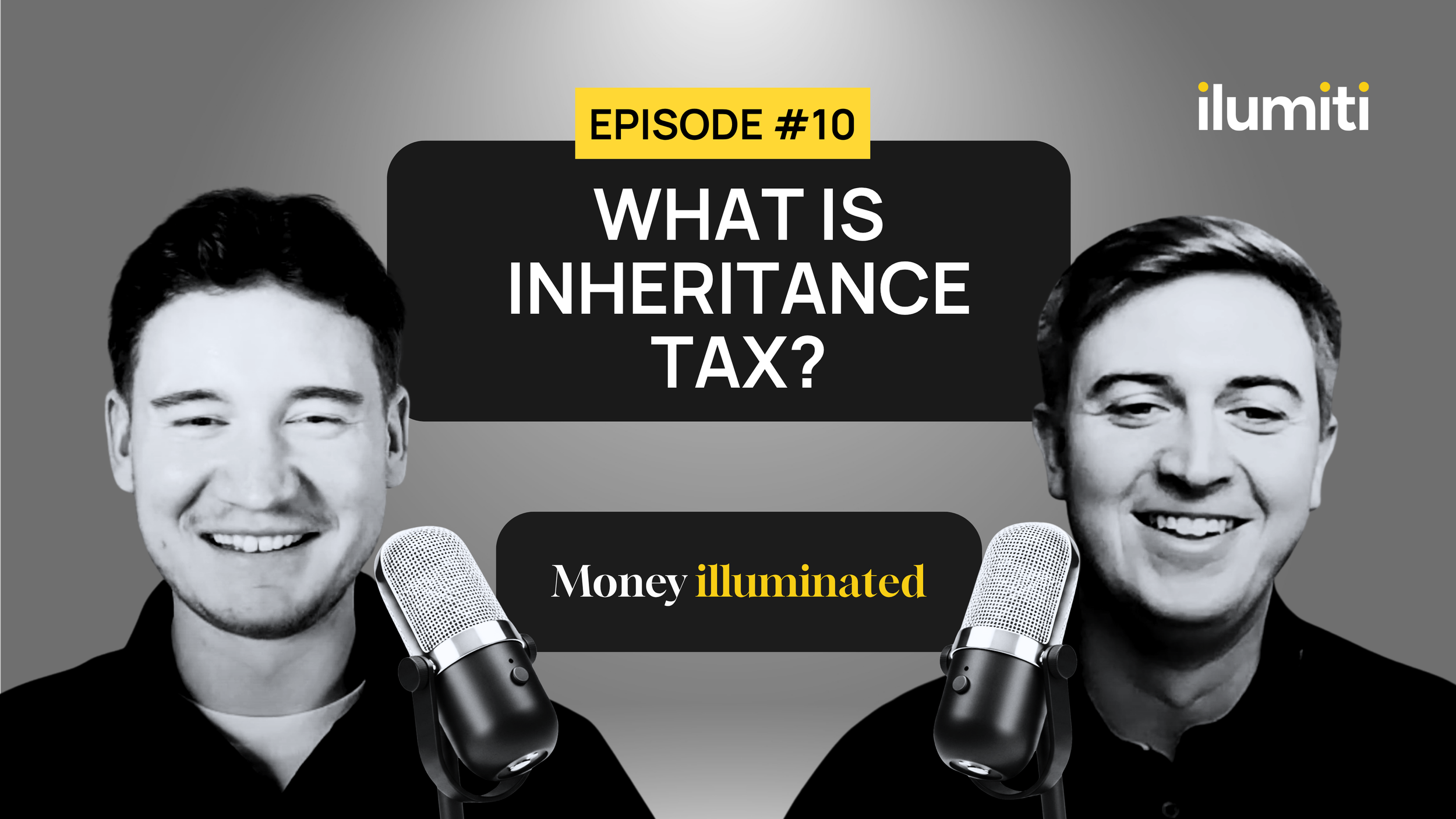
Inheritance tax can be a daunting topic for many individuals, often shrouded in confusion and misunderstanding. What is it? Who pays it? And how can you ensure your loved ones aren't left with unexpected financial burdens? In this episode of Money Illuminated, we’ll break down the essentials of inheritance tax, including its thresholds, who is responsible for paying it, and how to effectively plan your estate to minimize liabilities.

Got Questions? Request a Callback
Acknowledgement: By submitting this form, I acknowledge that I have read, understand and agree with the Privacy Policy.
You voluntarily choose to provide personal details to us via this website. Personal information will be treated as confidential by us and held in accordance with the Data Protection Act 2018. You agree that such personal information may be used to provide you with details of services and products in writing, by email or by telephone. By submitting this information you have given your agreement to receive contact from us.
About the experts

Jack Saunders is Head of Private Wealth at ilumiti and a Chartered Financial Adviser, specialising in retirement planning, tax‑efficient income strategies, and portfolio risk management for high‑net‑worth clients.

Elliot West is a Financial Adviser at ilumiti, advising UK professionals and couples on practical retirement cashflow planning, annuities vs drawdown decisions, and sustainable withdrawal strategies.
Lightbulb Moments
Watch bite-sized video snippets featuring key insights and takeaways from this episode.
What Is Inheritance Tax?
Inheritance tax is a tax levied on an individual's estate upon their death. This includes various assets such as property, money, and possessions. The tax is only applicable if the total value of the estate exceeds a certain threshold, which can vary by jurisdiction. In the UK, for example, the inheritance tax threshold is currently set at £325,000 per person. This means that if your estate is valued below this amount, you won’t have to pay any inheritance tax.
Who Pays Inheritance Tax?
Contrary to common belief, it is not the beneficiaries who pay the inheritance tax directly. Instead, the estate itself is responsible for settling the tax before assets are distributed to heirs. The executors or administrators of the estate are tasked with valuing the estate, determining any tax liabilities, and ensuring that the tax is paid to HM Revenue and Customs (HMRC) within six months of the date of death.
This process can be incredibly challenging, especially during a time of mourning. Executors must gather all financial information, assess the value of assets, and navigate the complexities of tax regulations.

What Are The Inheritance Tax Thresholds and Allowances
In the UK, every individual is entitled to a nil-rate band, which currently stands at £325,000. If you pass away and your estate is valued at £400,000, inheritance tax will be due on the amount exceeding this threshold. However, if you are passing on a main residence to direct descendants, you may benefit from an additional residence nil-rate band of £175,000. This effectively allows you to pass on up to £500,000 without incurring inheritance tax, provided that the estate is structured correctly.
For married couples or civil partners, these allowances can be combined, potentially allowing for a total exemption on estates valued at up to £1 million. However, it’s important to note that the residence nil-rate band begins to taper off if the estate exceeds £2 million.
Understanding the Inheritance Tax Rate
Anything above the applicable thresholds is taxed at a rate of 40%. For example, if your estate is valued at £1.1 million, the first £1 million is exempt, but the remaining £100,000 would incur a tax bill of £40,000. However, there is a tax reduction incentive for charitable donations. If you leave at least 10% of your estate to charity, the tax rate can be reduced to 36%.
Key Takeaways
Inheritance tax applies to estates exceeding a certain value, with specific thresholds in place.
The estate itself pays the tax, not the beneficiaries.
Proper estate planning can minimize potential tax liabilities, ensuring that more of your wealth is passed on to your loved ones.
Charitable donations can lower the inheritance tax rate, providing a dual benefit to your estate and selected charities.
Use gifting allowances early
Larger gifts can fall outside your estate after 7 years, and smaller annual allowances (£3,000 per year, £250 small gifts) can reduce your estate over time.
Utilising the ‘gifting out of income’ allowance
The other gifting allowances are capped at a specific amount – gifting out of income on the other hand is not. Provided the gifts come out of income, are regular payments and don’t effect your standard of living, you can gift an uncapped amount to your chosen beneficiaries, without triggering the 7-year rule.
Make use of family and wedding gifts
Parents can gift up to £5,000 for a child’s wedding (and smaller amounts for grandchildren or others), which is immediately free of inheritance tax.
Don’t be afraid to spend your money
Money spent during your lifetime can’t be taxed later. Enjoying your wealth can reduce a future inheritance tax bill.
What should you consider and do about Inheritance Tax?
Consider insurance to cover a future tax bill
Life insurance can be used to provide a lump sum on death to help beneficiaries pay an inheritance tax bill.
Explore trust planning
Trusts can move assets outside your estate, although they can be complex and need careful planning and advice.
Make full use of the Residence Nil Rate Band
Leaving your main home to direct descendants can unlock an additional £175,000 allowance per person, but only if your will is structured correctly.
Conclusion
Navigating inheritance tax can feel overwhelming, but understanding the basics can empower you to make informed decisions about your estate. With careful planning, you can ensure that your loved ones are not burdened by excessive tax liabilities and that your wishes are honoured after your passing. If you found this information helpful, consider discussing your estate planning options with a financial advisor or estate planner to ensure that your assets are managed according to your wishes.
What is inheritance tax?
Inheritance tax is a tax on the estate of a deceased person, applicable only if the estate's value exceeds a certain threshold.
Who pays inheritance tax?
The estate pays the inheritance tax before any assets are distributed to beneficiaries.
What are the current thresholds for inheritance tax?
The nil-rate band is currently £325,000, with potential additional allowances for those passing on a main residence to direct descendants.
How can I reduce my inheritance tax liability?
Consider charitable donations, which can reduce the tax rate from 40% to 36% if at least 10% of the estate is given to charity.
Please note: this podcast is for general information only and does not constitute financial advice, and was correct at the time of recording. The information is based on our understanding of current legislation, taxation and HMRC practice, all of which may change. Tax treatment depends on individual circumstances and may be subject to change in future. The Financial Conduct Authority does not regulate tax advice, estate planning, or cashflow planning. A pension is a long-term investment not normally accessible until age 55 (57 from April 2028 unless the plan has a protected pension age). The value of investments and pensions can go down as well as up, and you may get back less than you originally invested. This podcast does not constitute personal advice.